If you own rental property or you’re a tenant, smoke detectors aren’t just a safety recommendation — they’re a legal requirement in every U.S. state. But the specifics of who’s responsible for what, what type of detector is required, and what happens if the law isn’t followed vary significantly depending on where you live.
This guide breaks down the key differences in state smoke detector laws, with practical guidance for landlords and tenants.
Federal vs. State Smoke Detector Requirements
At the federal level, there is no single smoke detector law that applies to all homes. Instead, the framework works like this:
- NFPA 72 (National Fire Alarm and Signaling Code) is the model code that most states and local jurisdictions adopt. It sets the standards for placement, interconnection, and maintenance of smoke alarms in residential buildings.
- The International Residential Code (IRC) and International Fire Code (IFC) are model building codes adopted by most states. They require smoke detectors in all new construction, in every bedroom, outside each sleeping area, and on every level of the home.
- State legislatures adopt these model codes and add their own requirements — including specific rules for rental properties, landlord/tenant responsibilities, and penalties for non-compliance.
The result is a patchwork of state laws that share common elements but differ in important details. What’s required in California may not be required in Texas.
Who Is Responsible: Landlord or Tenant?
The general framework across most states:
Landlord responsibilities:
- Install working smoke detectors at the beginning of a tenancy
- Ensure detectors are present in all required locations (bedrooms, hallways, each level)
- Replace detectors that are faulty, expired, or damaged due to normal wear
- Provide documentation that detectors were installed and tested at move-in
Tenant responsibilities:
- Test detectors regularly (usually monthly, per manufacturer instructions)
- Replace batteries in detectors with replaceable batteries
- Notify the landlord in writing if a detector is not working
- Not disable, remove, or tamper with detectors
Where states differ:
- Some states (like California) require landlords to replace batteries, not just provide the detector
- Some states put the battery replacement responsibility on tenants
- Some states require 10-year sealed battery detectors, eliminating battery maintenance entirely
- Some states require annual inspections by the landlord or fire department
- Some states require CO detectors in addition to smoke detectors in rental properties
States Requiring CO Detectors in Rental Properties
As of 2026, most states require carbon monoxide detectors in rental properties that have fuel-burning appliances or attached garages. The National Conference of State Legislatures (NCSL) maintains a comprehensive table of state CO detector laws.
Key categories:
- Mandatory CO detectors in all rental properties: 27 states require CO detectors in rental units, regardless of when the building was constructed
- CO detectors required only in buildings with fuel-burning appliances or attached garages: 15 states
- CO detectors required in new construction only: 5 states
- No specific CO detector requirement for rentals: 3 states
If you’re a landlord, check your specific state’s requirements. If you’re a tenant and your rental has a gas furnace, gas stove, gas water heater, or attached garage, you likely have a legal right to a working CO detector — even if your state doesn’t explicitly require it, local building codes usually do.
For detailed information on when to replace CO detectors (which have a shorter lifespan than smoke detectors), see our CO detector replacement guide.
Key State-by-State Differences
Here are some states with notable or unique requirements:
California
California has some of the strictest smoke detector laws in the country. As of July 2014, all smoke alarms sold or installed in California must be 10-year sealed battery models (no replaceable 9V batteries). Landlords must install, test, and maintain detectors. Tenants must notify the landlord if a detector is not working but are not responsible for replacing batteries. California also requires CO detectors in all dwelling units with a fuel-burning appliance, fireplace, or attached garage.
Texas
Texas requires smoke detectors in all rental properties, with detectors in each bedroom and outside each sleeping area. Landlords must install and maintain detectors. Tenants are responsible for replacing batteries unless the detector is a sealed 10-year unit. Texas requires CO detectors in new construction but not in existing rental properties (unless local code requires it).
New York
New York requires smoke detectors in all rental properties. As of 2019, all smoke alarms sold or installed in New York must be 10-year sealed battery models. New York also requires CO detectors in all dwellings with a fuel-burning appliance or attached garage. Landlords are responsible for installation; tenants must maintain and test.
Florida
Florida requires smoke detectors in all rental properties. Detectors must be present in each bedroom and outside each sleeping area. Florida does not mandate 10-year sealed batteries statewide. Landlords must install detectors; tenants are responsible for battery replacement. CO detectors are required in new construction with fuel-burning appliances.
Maryland
Maryland was one of the first states to require 10-year sealed battery smoke detectors. As of 2018, all battery-only smoke alarms sold or installed in Maryland must be sealed 10-year units. Landlords must install and maintain detectors. CO detectors are required in all rental properties.
Oregon
Oregon requires 10-year sealed battery smoke detectors in all rental properties. Landlords must install, test, and maintain. Tenants must not tamper with or disable detectors. Oregon also has specific requirements for ionization smoke detectors — they must have a hush feature that allows the occupant to temporarily silence false alarms without removing the battery.
Illinois
Illinois requires smoke detectors in all residential buildings, including rentals. The state requires CO detectors in dwellings with fuel-burning appliances. Landlords must install and maintain detectors, and tenants must not disable them. Illinois law also requires that smoke detectors in buildings built after 1988 be hardwired with battery backup and interconnected.
Massachusetts
Massachusetts requires smoke detectors in every dwelling, including rental properties. The state has specific requirements based on building age: buildings built before 1975 can use battery-powered detectors, while buildings built after 1975 must have hardwired, interconnected detectors. Massachusetts also requires CO detectors in all dwellings with fuel-burning appliances, and requires a smoke detector compliance certificate before any home sale.
What Happens If a Landlord Doesn’t Comply
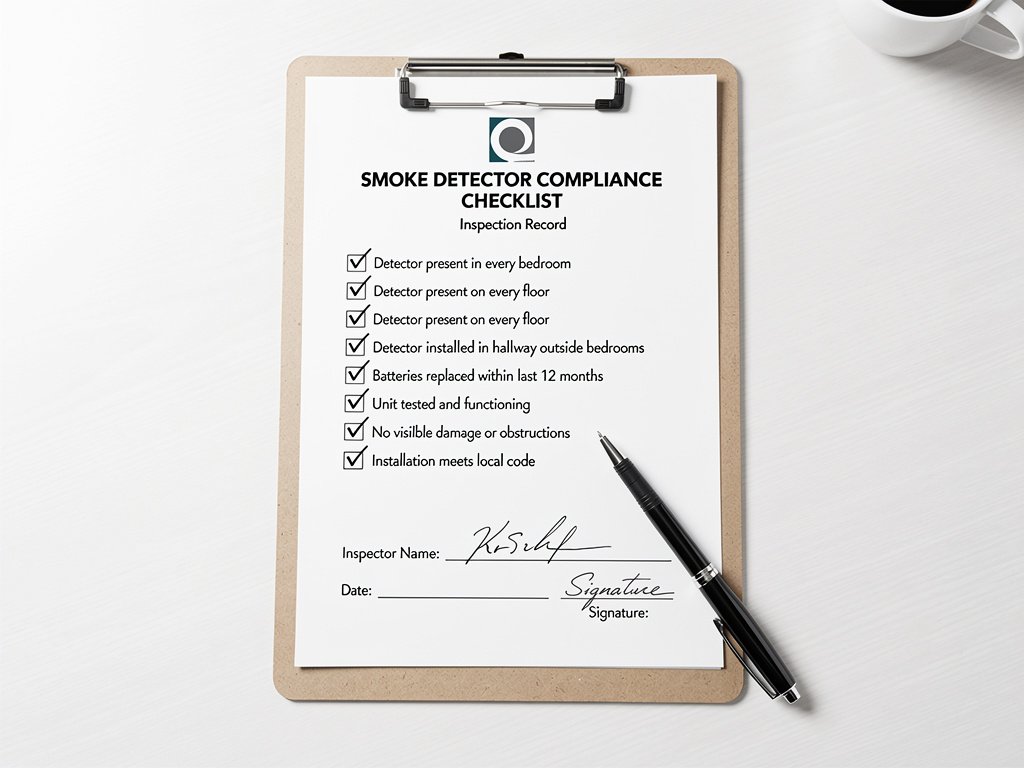
The consequences for non-compliance vary by state but can be severe:
Fines: Most states impose fines for missing or non-functional detectors. California, for example, can fine landlords up to $200 per violation after a 30-day notice to correct. Other states impose similar fines.
Liability: If a fire occurs and a tenant is injured or killed because the landlord failed to install or maintain required smoke detectors, the landlord can face significant civil liability. In many states, this includes both compensatory and punitive damages.
Habitability: In many states, working smoke detectors are part of the “implied warranty of habitability” — the legal requirement that rental properties be safe and livable. A missing or non-functional detector can give tenants the right to withhold rent, break a lease, or seek a court order.
Criminal charges: In extreme cases — where a landlord knowingly disabled a detector or willfully ignored repeated tenant requests — criminal charges are possible.
Tenant Responsibilities
Tenants also have legal obligations:
- Test detectors monthly and report any issues to the landlord in writing
- Replace batteries in states where that responsibility falls on the tenant (check your lease and state law)
- Never disable, remove, or tamper with detectors — this is illegal in most states and can result in fines or eviction
- Report malfunctioning detectors promptly — if the landlord doesn’t respond within a reasonable time (typically 14 days in most states), file a complaint with the local housing authority or fire department. Many states allow tenants to repair and deduct the cost from rent if the landlord fails to address a safety issue after written notice.
Keep documentation — if you report a broken detector, keep a copy of your written notice to the landlord. If a fire occurs and the detector was known to be non-functional, this documentation protects your legal rights. Take a photo of the non-working detector as additional evidence.
Don’t cover detectors with decorations — painting over a smoke detector, covering it with a cap, or installing it behind a decorative plate blocks the vents and makes it useless. This is considered tampering in most states.
Smoke Detector Requirements for Home Sales
If you’re selling a home, many states require a smoke detector compliance certificate:
- States like California, New York, and Massachusetts require sellers to certify that smoke detectors (and often CO detectors) are installed and working before the sale closes
- The requirement often falls on the seller to install or replace non-working detectors before closing
- Home inspectors check detector placement and function during the inspection process
10-Year Sealed Battery Laws
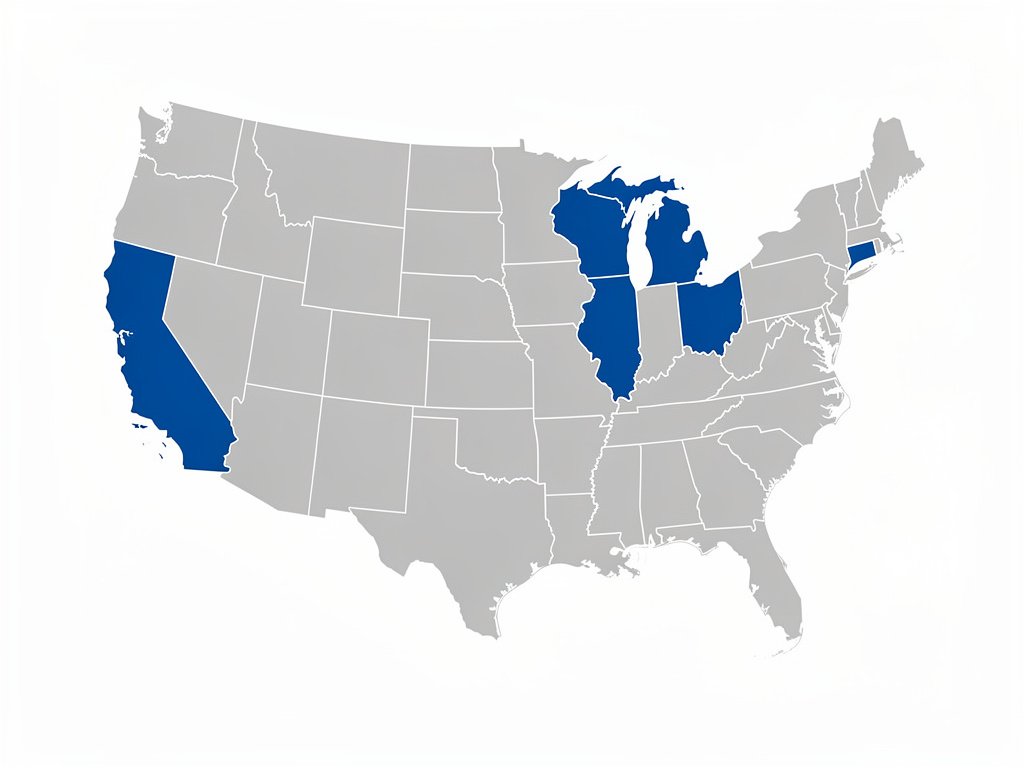
A growing number of states now require 10-year sealed battery smoke detectors. These eliminate the battery-replacement problem entirely — the battery lasts the full 10-year life of the detector. States with this requirement include:
- California (2014)
- Oregon (2012)
- Maryland (2018)
- New York (2019)
- Louisiana (2015)
- Wisconsin (2018)
- Several others with varying implementation dates
If you live in one of these states and your detector has a replaceable 9V battery, it’s likely not compliant — even if it works. The law requires the type of detector, not just the function. See our how long do smoke detectors last guide for more on 10-year sealed units.
FAQ
Who is responsible for replacing smoke detector batteries — landlord or tenant? It depends on the state. In states with 10-year sealed battery requirements (California, Oregon, Maryland, New York), the landlord installs sealed units and battery replacement isn’t needed. In other states, the tenant is typically responsible for replacing batteries. Check your lease — it should specify who is responsible.
What if my landlord won’t install smoke detectors? Put your request in writing and keep a copy. If the landlord doesn’t respond, contact your local housing authority or fire department. In most states, missing smoke detectors are a code violation that the landlord is legally required to fix. You may also have the right to install your own detectors and deduct the cost from rent (check state law first).
Are smart smoke detectors (like Nest Protect) required by law? No. State laws specify that smoke detectors must meet UL safety standards — they don’t require smart features. A basic, code-compliant smoke detector satisfies the legal requirement. Smart detectors are a choice, not a mandate. See our smart smoke alarm guide if you’re considering an upgrade.
Do I need a smoke detector in every bedroom? In most states, yes. The NFPA 72 and International Residential Code require smoke detectors in every bedroom, outside each sleeping area, and on every level of the home. This applies to new construction and, in many states, to existing homes as well. See our smoke detector placement guide for detailed placement rules.
Can a landlord charge me for a smoke detector I broke? If you intentionally damaged or disabled a smoke detector, the landlord can charge you for the replacement and may include a penalty. If the detector stopped working due to normal wear or age, the landlord is responsible for replacing it at no cost to you.
Know Your State’s Requirements
Smoke detector laws change. States add new requirements, update building codes, and pass new legislation. The information in this guide is current as of 2026, but you should verify your state’s specific requirements through your state fire marshal’s office or local building department.
If you’re a landlord, the safest approach is to install 10-year sealed battery detectors in every required location, document the installation, and have tenants sign a move-in checklist confirming the detectors are present and working. If you’re a tenant, know your rights, test your detectors monthly, and report issues in writing.
The cost of compliance is small — a smoke detector replacement costs $20-40 per unit. The cost of non-compliance, in fines, liability, or worse, is far higher.