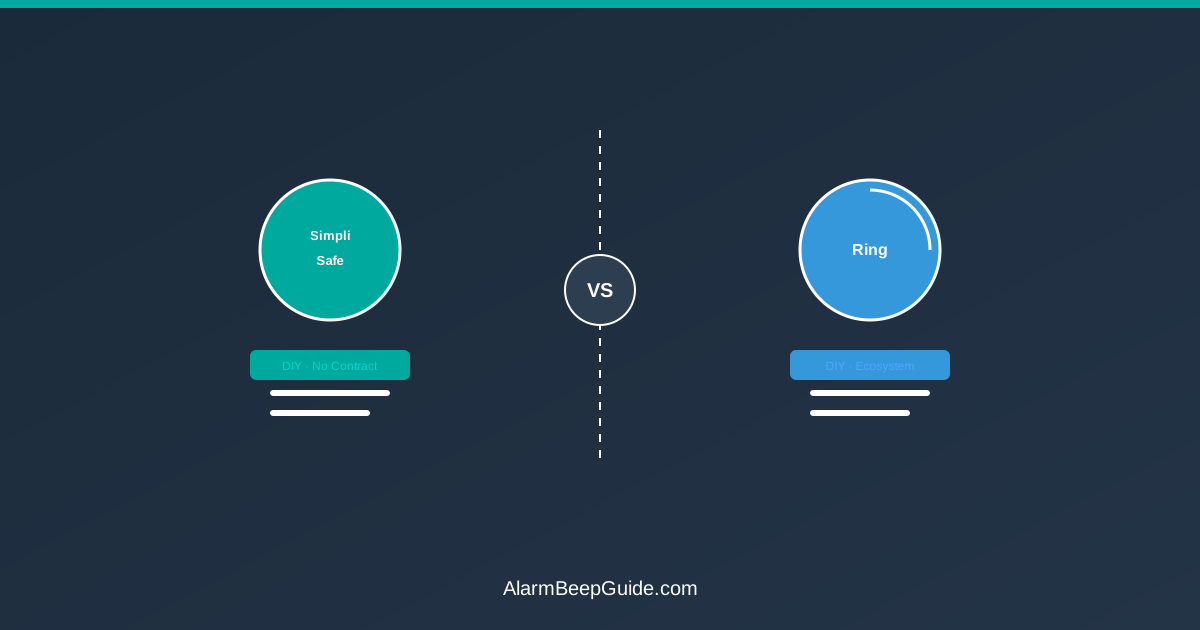
If you have ever woken up in the middle of the night to a blaring siren or found yourself staring at a “system offline” notification on your smartphone, you know the specific brand of anxiety that comes with a malfunctioning security system. When your primary line of defense fails, the question isn’t just about which brand is better, but Simplisafe vs Ring Alarm: which one will actually provide the peace of mind you are looking for?
Choosing between these two giants is a common dilemma for homeowners. One promises unparalleled simplicity and a “set it and forget it” experience, while the other offers a deep, interconnected smart home ecosystem. This guide is designed for the homeowner who is tired of technical glitches, high hidden costs, or overly complex setups. We will troubleshoot the core differences to help you decide which system will stop being a source of stress and start being a reliable guardian for your property.
- [Internal Link Suggestion: “How to troubleshoot a disconnected smart home sensor”]
- [Internal Link Suggestion: “The ultimate guide to DIY home security installation”]
Understanding the Core Differences: Simplisafe vs Ring Alarm
At first glance, both Simplisafe and Ring Alarm appear to offer the same thing: a collection of sensors, a central hub, and an app to monitor your home. However, the fundamental philosophy behind each product is vastly different.
Simplisafe: The “Plug-and-Play” Specialist
Simplisafe was built with a single goal in mind: simplicity. It is designed for the homeowner who wants a professional-grade security system without the professional-grade headache. The hardware is modular, the setup is incredibly intuitive, and the interface is stripped of unnecessary complexities.
If your current “alarm issue” is that your existing system is too complicated to arm and disarm daily, Simplisafe is often the antidote. It functions as a standalone security pillar. While it can interact with some smart devices, it doesn’t try to be the brain of your entire house; it just tries to be a very good guard.
Ring Alarm: The Smart Home Integrator
Ring, owned by Amazon, views security as just one piece of a much larger puzzle. If you already use Alexa, Echo Dots, or Ring Video Doorbells, the Ring Alarm system is designed to weave into that existing web of technology.
Ring is for the homeowner who wants their lights to turn off when the alarm is armed, or who wants their doorbell to trigger a specific routine on their smart display. However, this complexity is a double-edged sword. The more “connected” a system is, the more potential points of failure exist.
Installation and Setup: Eliminating DIY Frustrations
One of the most common complaints from homeowners is the “installation nightmare”—the period of time between unboxing a product and actually having a functional, reliable system.
Troubleshooting the Setup Process
When comparing Simplisafe vs Ring Alarm, the installation experience is a major differentiator.
Simplisafe Setup: The setup is almost entirely “unboxing and sticking.” Most sensors come pre-configured to the base station. You peel the adhesive, stick the sensor, and you are done.
- Pro Tip: If you encounter “sensor not found” errors during setup, the issue is rarely the hardware; it is usually a battery pull issue. Ensure you have removed any plastic battery tabs before attempting to pair.
Ring Alarm Setup: Ring requires a bit more “digital heavy lifting.” Because Ring is intended to integrate with your Wi-Fi and Amazon account, you will spend more time in the app configuring settings, naming devices, and setting up “Z-Wave” connections for third-party peripherals.
- Pro Tip: If you are experiencing connectivity drops during Ring setup, check your Wi-Fi signal strength at the exact location where the Hub will sit. Ring relies heavily on a stable, high-bandwidth connection to maintain its smart features.
Practical Advice for Sensor Placement
Regardless of which system you choose, improper placement is the #1 cause of “false alarm” issues.
- Avoid Heat Sources: Never place motion sensors directly facing a radiator or fireplace. Rapid temperature changes can trigger PIR (Passive Infrared) sensors erroneously.
- The “Window Draft” Rule: If you use contact sensors on windows, ensure they are mounted on stable frames. In older homes, vibrating window frames can cause the sensor to “break” contact momentarily, triggering an alarm.
- heavy curtains or blinds can block the “view” of motion sensors, creating blind spots in your security coverage.
Monitoring and Subscription Tiers: Is the Monthly Fee Worth It?
The “sticker shock” of home security usually doesn’t happen at the checkout counter; it happens three months later when the first subscription bill arrives. When evaluating Simplisafe vs Ring Alarm, you must look at the long-term cost of ownership.
Simplisafe: Transparent but Rigid
Simplisafe’s pricing model is straightforward. You pay for the hardware, and then you choose a monitoring tier.
- Self-Monitoring: You get app alerts, but no professional dispatch.
- ability 2: Professional Monitoring: This is where the value lies. If an alarm goes off, a dispatcher is notified and can call emergency services.
- The Benefit: There are rarely “hidden” features locked behind higher tiers. What you see is what you get.
Ring Alarm: The Ecosystem Upsell
Ring’s pricing is tied to the Ring Protect Plan.
- The Benefit: A single subscription can cover not just your alarm, but also your Ring Video Doorbell and many Ring Stick Up Cams. This makes it incredibly cost-effective for “heavy” Ring users.
- The Drawback: If you want advanced features like “Person Detection” or extended video history for your cameras, you must move up to the higher-tier plans. This can lead to “subscription creep,” where your monthly security bill grows as you add more devices.
Actionable Advice for Budgeting
Before committing, create a spreadsheet for a 24-month period. Include:
- Initial hardware cost.
- Monthly subscription cost x 24.
- Cost of extra sensors (if you decide to expand later). Often, the “cheaper” hardware of one system is offset by the more expensive monthly service of another.
ability 3: Feature Deep Dive: Sensors, Cameras, and Smart Integration
If your current security issue is that your system feels “dumb”—meaning it alerts you that something happened, but doesn’t give you enough context—the feature set becomes vital.
The Power of Context (Ring)
Ring excels at providing context. Because the Alarm is integrated with the Ring Video Doorbell, an alert on your phone can immediately launch a live video feed. You can see the person at the door, check your porch, and interact via Two-Way Talk, all within the same ecosystem. For a homeowner who wants to “see” the threat before deciding to call the police, Ring is superior.
The Power of Simplicity (Simplisafe)
Simplisafe focuses on the “Alert.” When a sensor is tripped, you get a notification. It is clean, fast, and unobtrusive. While Simplisafe does offer cameras, they do not attempt to manage your entire smart home. This is a massive advantage for homeowners who find “notification fatigue” to be a problem. If you want a system that stays quiet until it is absolutely necessary, Simplisafe is the better choice.
Comparison Table: Feature Quick-Look
| Feature | Simplisafe | Ring Alarm |
|---|---|---|
| Primary Strength | Ease of use & reliability | Smart home integration |
| Setup Difficulty | Very Low (Plug & Play) | Moderate (Configurable) |
| Ecosystem | Standalone/Limited | Deep Amazon Alexa Integration |
| Best For | Non-tech savvy homeowners | Smart home enthusiasts |
| False Alarm Risk | Low (due to simplicity) | Moderate (due to complexity) |
Reliability and Connectivity: Preventing System Failures
The most terrifying moment for a homeowner is realizing their security system has been “offline” for days without them knowing. When comparing Simplisafe vs Ring Alarm, you must look at how they handle the “Three Pillars of Failure”: Power Outages, Wi-Fi Loss, and Cellular Dead Zones.
Handling Power Outages
Both systems include battery backups, but their implementation differs.
- Simplisafe: The Base Station contains a rechargeable battery designed to keep the system alive for many hours during a blackout. It is designed to be a “black box” that stays running even when the lights go out.
- Ring: Ring also offers battery backup, but because Ring devices (like cameras) are often Wi-Fi dependent, a power outage that kills your router can render your Ring cameras useless, even if the Alarm Hub is still powered by its battery.
Managing Wi-Fi Instability
If you suffer from “unstable Wi-Fi” (a common issue in large or older homes), you need to be careful.
- The Ring Risk: Since Ring is heavily reliant on the cloud and continuous Wi-Fi communication for its smart features, a flickering internet connection can lead to delayed notifications or “Device Offline” errors.
- The Simplisafe Advantage: Simplisafe uses a more proprietary, streamlined communication method between its sensors and the base station. While it still needs Wi-Fi for app alerts, the core “alarm” function is much more resilient to minor network hiccups.
Troubleshooting Connectivity Issues
If you are currently struggling with a system that keeps dropping offline, try these steps:
- Install a Wi-Fi Extender: If your hub is far from the router, a dedicated extender can stabilize the signal.
- Assign a Static IP: For more advanced users, assigning a static IP to your Ring or Simplisaable Hub can prevent the “re-identification” lag that often happens after a router reboot.
- Check for Interference: Large metal objects, mirrors, and even microwave ovens can interfere with the 2.4GHz frequency used by these systems. Ensure your hub is placed in an open, central location.
The Verdict: Which System Should You Choose?
There is no objective “winner” in the Simplisafe vs Ring Alarm debate; there is only the winner that fits your specific lifestyle and technical comfort level.
Choose Simplisafe if:
- You want a system that you can set up in under 30 minutes without reading a manual.
- You are frustrated by complex technology and want a “set it and forget it” solution.
- You want a transparent, predictable monthly cost.
- You want a system that is highly resistant to “false alarm” triggers caused by smart home complexity.
Choose Ring Alarm if:
- You are already an Amazon Alexa user and want to automate your home.
- You want a single app to manage your doorbell, floodlights, and alarm.
- You enjoy the “tinkering” aspect of smart home technology.
- You want the most cost-effective way to scale a large number of cameras alongside your alarm.
Final Thought for the Troubleshooting Homeowner: If your current security setup is causing you more stress than it is providing protection, it is time to move away from “fixing” and toward “replacing.” Whether you choose the streamlined simplicity of Simplisafe or the integrated intelligence of Ring, the goal remains the same: a home that feels safe, even when you aren’t looking.
Are you ready to upgrade your home security? Browse our top-rated security hardware reviews to find the perfect fit for your budget today!
Related Articles
- Ring Alarm vs ADT — Ring vs professional monitoring
- Best Home Security Systems With No Monthly Fee — all top DIY options
- How to Choose a Home Alarm System — buying guide