If you have a Kidde smoke detector in your home, you need to check it. Kidde has issued four separate recalls since 2014, covering over a million smoke and combination smoke/CO alarms. Some of these recalls are still active — meaning you can still get a free replacement.
The problem is that most people don’t know their detector was recalled. The alarms don’t look different from non-recalled models. They still beep, flash, and test normally — until the moment they fail to alert you to a fire.
This guide covers every Kidde recall, exactly which models are affected, how to check your detector, and what to do if yours is on the list.
All Kidde Smoke Detector Recalls at a Glance
Kidde has been the subject of four major recalls involving smoke and carbon monoxide detectors. Here’s the complete list:
Recall 1: NightHawk Combo Smoke/CO Alarm (2014)
- Model: KN-COSM-IB
- Manufacture dates: June 1, 2004 through December 31, 2010
- Issue: The alarm can fail to alert occupants to dangerous levels of carbon monoxide. The voice warning module can fail.
- Units affected: Approximately 1.2 million
- CPSC recall number: 14-097
Recall 2: Dual-Sensor Smoke Alarms (2018)
- Models: PI2010 (AC/hardwired) and PI9010 (DC/battery powered)
- Manufacture dates: 2016 through March 2018
- Issue: A yellow plastic cap was left on the smoke sensor during manufacturing, which can compromise the smoke detection capability. The cap was supposed to be removed during assembly.
- Units affected: Approximately 452,000
- CPSC recall number: 18-093
Recall 3: TruSense Smoke and Combination Alarms (2021)
- Models: Series 2040, 2050, 2060, and 2070
- Manufacture dates: Purchased May 2019 through September 2020
- Issue: The TruSense smoke sensor technology can fail to alert occupants to a fire. Only alarms with the “TruSense” logo or “AMBER=FAULT” printed on the front are included.
- Units affected: Approximately 378,000
- CPSC recall number: 21-130
Recall 4: Combination Smoke/CO Alarms (2014, separate from Recall 1)
- Models: Various combination smoke/CO alarm models sold between 2008 and 2011
- Issue: The alarm can chirp and fail to properly alert during a fire or CO event.
- Units affected: Approximately 440,000
How to Check If Your Kidde Detector Is Recalled
Checking takes about two minutes. Here’s the step-by-step process:
Step 1: Remove the Detector From Its Mount
For battery-powered models: twist counterclockwise or slide off the mounting plate. For hardwired models: turn off the circuit breaker first, then twist off and disconnect the wiring harness.
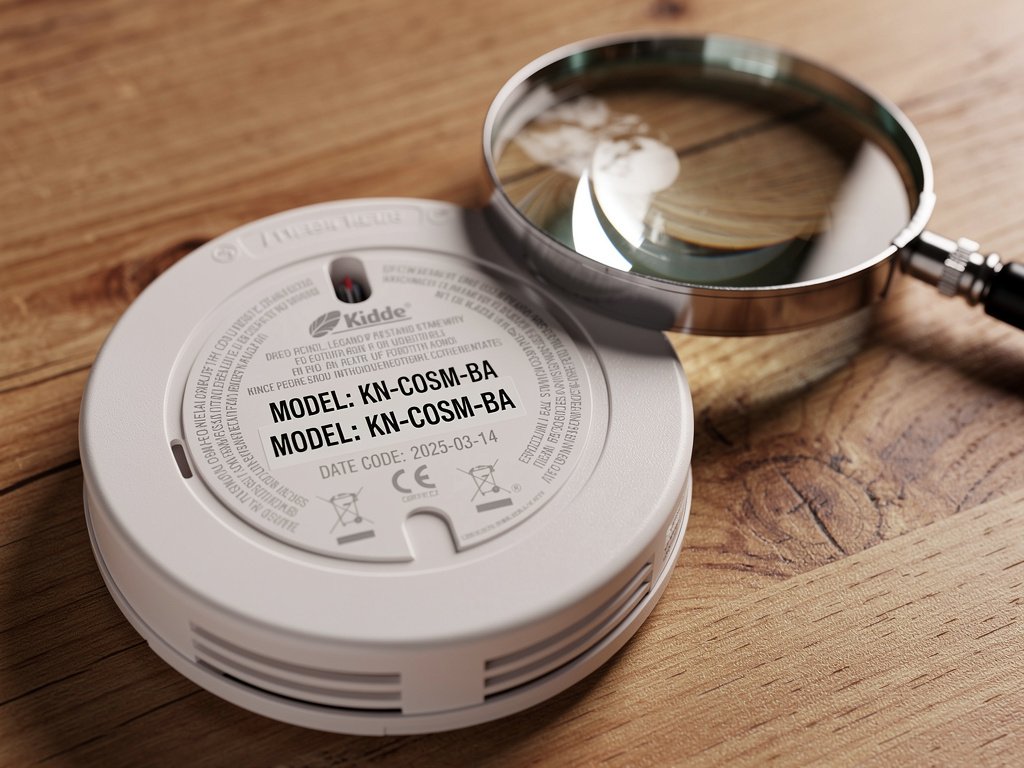
Step 2: Read the Back Label
On the back of every Kidde smoke detector, you’ll find:
- The model number (e.g., PI2010, 2040-DSR, KN-COSM-IB)
- The date code or manufacture date
- “KIDDE” printed on the front center
Step 3: Check Against the Recall Lists
Compare your model number and date against the recall details above:
- KN-COSM-IB manufactured June 2004–December 2010 → Recalled (Recall 1)
- PI2010 or PI9010 manufactured 2016–March 2018 → Recalled (Recall 2)
- 2040, 2050, 2060, or 2070 series with TruSense or AMBER=FAULT on the front, purchased May 2019–September 2020 → Recalled (Recall 3)
Step 4: Look for the Yellow Cap (PI2010/PI9010 Only)
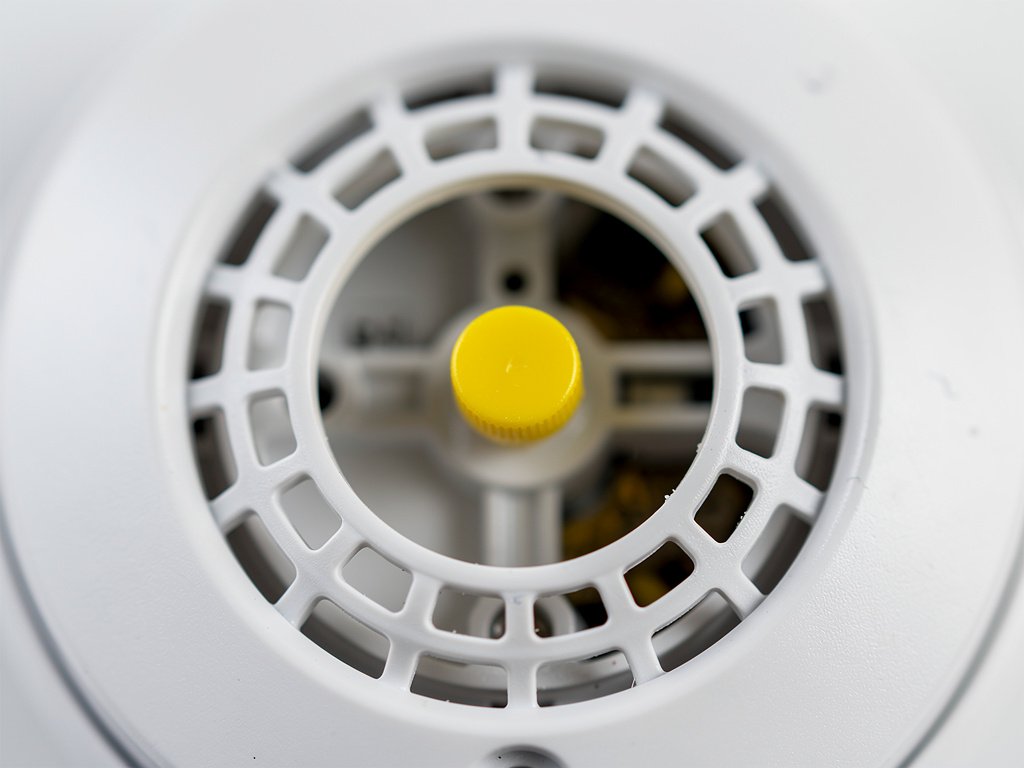
If you have a PI2010 or PI9010, look through the sensor vents on the front of the alarm. If you can see a small yellow plastic cap inside, your alarm is affected. If you don’t see a yellow cap, your alarm is likely fine — but you can still contact Kidde to confirm.
Step 5: Look for the TruSense Logo (2040–2070 Only)
If your model is in the 2040–2070 series, check the front of the alarm. Only units with the “TruSense” logo or “AMBER=FAULT” printed on the front are recalled. If your alarm doesn’t have either marking, it’s not part of the recall.
What to Do If Your Detector Is Recalled
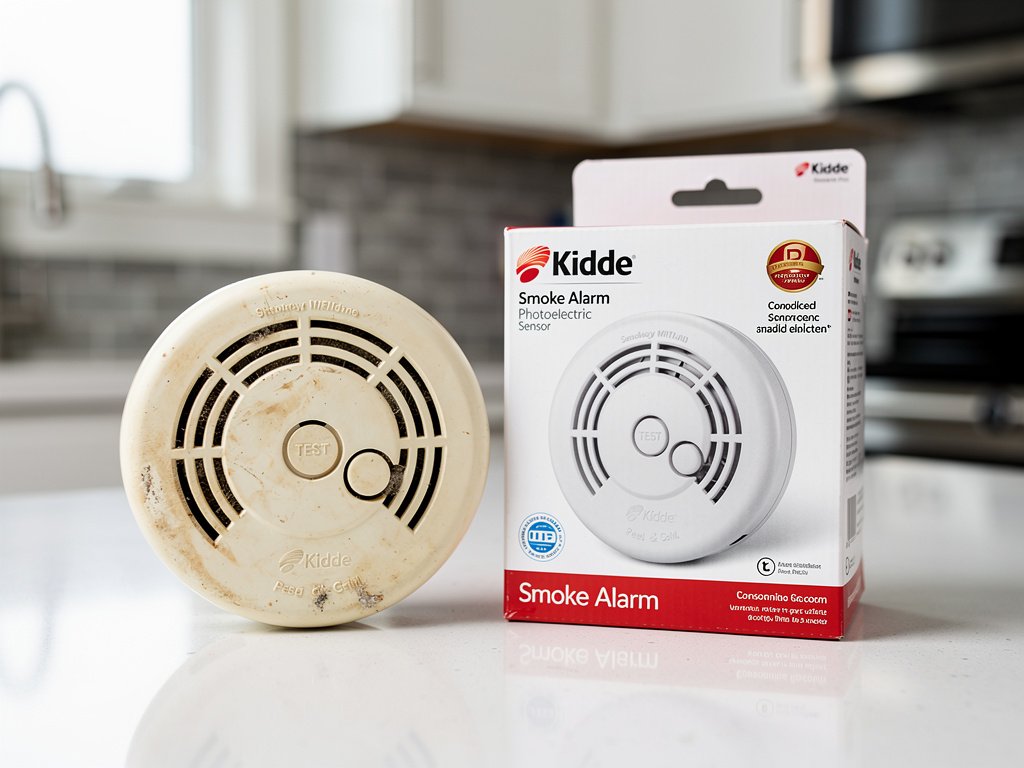
If you’ve confirmed your Kidde detector is on any of the recall lists, here’s what to do:
1. Don’t Throw It Away Yet
The CPSC and Kidde both say: keep using the recalled alarm until you receive and install the replacement. A recalled smoke detector that might fail is still better than no smoke detector at all. The failure is not guaranteed — it’s a risk, not a certainty. Keep the alarm on your ceiling until the free replacement arrives.
2. Contact Kidde for a Free Replacement
You have three options:
- Visit Kidde’s product safety page at kidde.com/product-safety-notices
- Call Kidde directly at 1-855-239-0491 (for TruSense recall) or 1-855-286-0036 (for PI2010/PI9010 recall)
- Contact the CPSC at saferproducts.gov or 800-638-2772
Kidde will send a free replacement alarm. You’ll need to provide your model number and date code.
3. Install the Replacement
Once the new alarm arrives, swap it for the recalled unit. For hardwired models, turn off the breaker before removing the old unit. For interconnected systems, make sure the replacement is compatible with your existing interconnected alarms — Kidde will send a model that works with your setup.
4. Register Your New Alarm
Register your replacement alarm with Kidde so you’ll be notified of any future recalls. You can register at kidde.com/register.
Why Recalled Detectors Are Dangerous
Each Kidde recall involves a specific failure mode, and understanding them helps explain why you shouldn’t ignore a recall:
The yellow cap issue (PI2010/PI9010): A small yellow plastic cap was left on the smoke sensor during manufacturing. This cap blocks smoke from reaching the sensor chamber, meaning the alarm may not detect smoke even in a real fire. The defect is invisible from the outside — the alarm looks and sounds normal during tests, but the actual smoke detection capability is compromised.
The TruSense failure (2040–2070): The TruSense technology was supposed to be an improvement over older sensor designs. Instead, it can fail to detect specific types of fires. The alarm passes self-tests and appears to work normally, but may not alert you when it matters most.
The NightHawk voice module (KN-COSM-IB): The voice warning module — which was a selling feature of this model — can fail. The alarm may still beep, but the voice warning that tells you “Fire! Fire!” or “Warning, carbon monoxide!” may not play, which can delay your response.
Which Stores Sold the Recalled Alarms
Knowing where the recalled units were sold can help you figure out if you might have one:
- PI2010 and PI9010 (2018 recall): Sold at Home Depot, Walmart, Amazon, Menards, and other retailers nationwide from January 2016 through March 2018. Priced between $20 and $40.
- TruSense 2040-2070 (2021 recall): Sold at Walmart, Home Depot, Amazon, and Menards from May 2019 through September 2020. Priced between $20 and $60.
- NightHawk KN-COSM-IB (2014 recall): Sold at electrical distributors and hardware stores nationwide from June 2004 through December 2010. Priced between $40 and $65.
If you purchased a Kidde smoke or CO alarm from any of these retailers during these date ranges, it’s worth checking your model even if you’re not sure of the exact model number.
How to Identify a Non-Recalled Replacement
If you’re buying a new Kidde detector (or checking a replacement you received), here’s what to look for:
- New models not affected by recalls: Kidde’s current product line includes models that are not part of any recall. The replacement units Kidde sends will be non-recalled, current models.
- Check the manufacture date: Any Kidde alarm manufactured after 2021 that is not in the 2040–2070 TruSense series is not affected by the recalls above.
- Verify on the CPSC website: You can check any product at cpsc.gov/Recalls to see if it has been recalled.
If you want to avoid Kidde entirely, First Alert smoke detectors are a reliable alternative with no current recalls. We’ve compared the two brands in detail in our First Alert vs Kidde smoke alarm guide.
If You Can’t Find Your Model Number
Some older detectors have faded labels or labels that are hard to read. If you can’t find your model number:
- Take a photo of the back of the alarm with your phone’s flash on — sometimes the text is there but hard to read with the naked eye. Zoom into the photo to read the fine print.
- Look for a QR code — some newer Kidde models have a QR code on the back that links directly to the product page or recall information.
- Contact Kidde directly at 1-800-880-6788 with any information you do have (approximate purchase date, what the alarm looks like, whether it’s hardwired or battery-powered). Kidde’s customer support can look up the model from the serial number or physical description.
- Check your receipt or order history — if you bought the detector online (Amazon, Home Depot, Walmart), your order history will have the model number.
- When in doubt, replace it. If your Kidde detector is more than 10 years old, it needs to be replaced regardless of recall status. Smoke detectors have a maximum 10-year lifespan per NFPA and UL standards. If it’s that old, just buy a new one. The cost of a replacement detector is minimal compared to the risk.
FAQ
Are Kidde smoke detectors safe? Current, non-recalled Kidde smoke detectors are safe and meet all UL safety standards. The recalls affect specific model numbers and manufacture dates only. If your detector is not on any recall list and is less than 10 years old, it’s safe to use.
How do I know if my Kidde smoke detector is recalled? Remove it from the ceiling, read the model number and date code on the back, and compare against the four recall lists in this guide. You can also check at cpsc.gov or kidde.com/product-safety-notices.
What do I get as a replacement? Kidde provides a free replacement alarm of equal or greater value. The replacement will be a current, non-recalled model that is compatible with your existing setup (hardwired, battery, or interconnected).
Can I get a refund instead of a replacement? The recalls provide for a free replacement alarm, not a cash refund. However, if you’ve already replaced the alarm at your own expense, you may be able to contact Kidde about reimbursement.
Should I just throw away my recalled detector? No. Keep using it until the replacement arrives. A potentially faulty smoke detector is better than no smoke detector. Install the replacement first, then dispose of the old one.
What if I already threw away my recalled detector? If you’ve already discarded the recalled alarm without requesting a replacement, you can still contact Kidde. They may ask for proof of purchase or the model number from a receipt, but they generally still provide a free replacement. You can also file a report at saferproducts.gov.
Can I check for recalls on other brands too? Yes. The CPSC maintains a database of all recalls at cpsc.gov/Recalls. You can search by brand, product type, or recall date. If you have detectors from multiple brands, check each one — First Alert and other manufacturers have had their own recalls historically as well.
Don’t Ignore a Recall
Smoke detector recalls aren’t like recalling a phone that has a battery glitch. A recalled smoke detector can fail to warn you about a fire in your home. The fix is free — you just need to check your model number and contact Kidde.
Take five minutes today to check every Kidde detector in your home. If one is on the recall list, request a free replacement tonight. It’s the easiest safety improvement you’ll ever make.
If you’re also dealing with a Kidde detector that keeps chirping or a hardwired Kidde alarm that won’t stop beeping, check the recall first — a manufacturing defect could be the root cause of the chirping, not just a battery issue. And if you’re considering switching brands after a recall experience, our First Alert vs Kidde comparison covers the differences in sensor technology, features, and reliability between the two biggest names in home smoke detection.