First Alert SC5 vs Nest Protect: The Definitive Replacement Guide

AlarmBeepGuide Team 19 min read

Compare the First Alert SC5 and Nest Protect smoke detectors. Features, pricing, migration options, and which is right for your home.

First Alert SC5 vs Nest Protect: The Definitive Replacement Guide

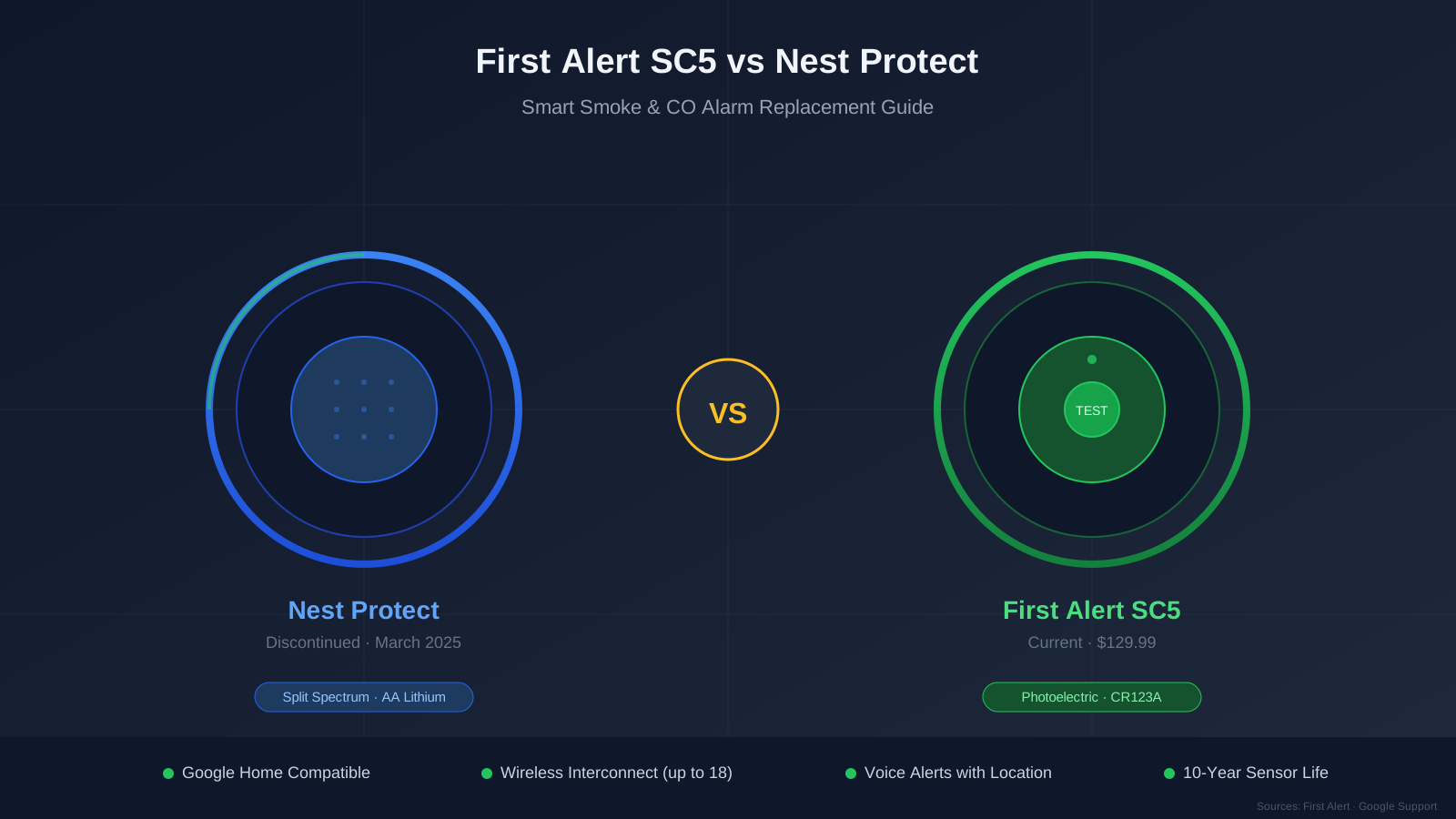
The First Alert SC5 is the officially recommended replacement for the discontinued Google Nest Protect smoke and carbon monoxide alarm. While the Nest Protect is no longer in production, the First Alert SC5 9th Generation alarm retains the signature voice alerts and mounting compatibility, allowing homeowners to transition seamlessly without replacing existing wall brackets. If you are looking for a direct substitute that maintains safety standards and smart features, the First Alert SC5 is the current market leader for this specific upgrade path in 2026.

What This Guide Covers

The End of an Era: Why Nest Protect Was Discontinued

Understanding the history of the Nest Protect is crucial before purchasing a replacement. The Nest Protect was launched in 2013 and quickly became the gold standard for residential fire safety. It combined photoelectric smoke detection with electrochemical carbon monoxide sensors in a device that looked like a piece of modern art rather than a plastic alarm. However, by late 2022 and 2023, Google officially discontinued the product line.

The Supply Chain and Regulatory Factors

The discontinuation was not due to safety failures but rather a combination of supply chain constraints and evolving regulatory requirements. As fire safety standards evolved, manufacturing costs for the specific sensors used in the Nest Protect rose significantly. Google determined that the margins were no longer sustainable for the standalone hardware business. Additionally, maintaining the proprietary communication protocols required for the “Nest” ecosystem became less of a priority as Google shifted focus toward the Matter standard.

What This Means for Existing Owners

For users who still have active Nest Protect units, the devices will continue to function until their end-of-life date, typically 10 years from the date of manufacture. However, once that date passes, the sensors degrade, and the unit becomes a safety hazard. Because Google is no longer manufacturing them, you cannot buy a new Nest Protect to replace an old one. This creates a “replacement cliff” where thousands of homeowners must find a new device that fits their existing infrastructure. The First Alert SC5 was developed specifically to address this gap, ensuring that the transition from the beloved Nest ecosystem to a new provider does not require a complete renovation of your ceiling or wall mounting points.

The Official Partnership

First Alert, a long-standing leader in fire safety, partnered with Google to create the SC5. This is not just a third-party alternative; it is the officially endorsed successor. This partnership ensures that the SC5 meets the rigorous safety standards that the Nest Protect was built upon, while utilizing the manufacturing scalability of First Alert. When comparing the First Alert SC5 vs Nest Protect, you are essentially comparing the original legacy device against its authorized successor. The goal is to maintain safety levels while modernizing the hardware for the current market landscape.

First Alert SC5 Overview: The Official Successor

The First Alert SC5 (9th Generation) is a smart smoke and carbon monoxide alarm designed to replace the Nest Protect. It retains the core functionality that users loved: voice announcements, remote monitoring, and high-accuracy sensors. However, there are distinct changes in how the device operates regarding connectivity and power management. Understanding these nuances is vital for setting expectations correctly.

Design and Build Quality

Visually, the First Alert SC5 is nearly identical to the Nest Protect. It features the same white, circular design with a smooth surface and a central hub. This aesthetic continuity is intentional, ensuring that the device blends seamlessly into homes that previously had Nest Protects installed. However, some long-term users have noted slight differences in the plastic feel and the LED ring. While the Nest Protect had a distinctive ambient light feature that glowed orange when active and blue when idle, the SC5 utilizes a more traditional LED indicator system. This change was made to reduce false triggers and improve battery efficiency, though it sacrifices some of the “smart” ambiance that Nest owners enjoyed.

Sensor Technology

At the heart of the SC5 is a dual-sensor technology similar to the Nest Protect. It utilizes photoelectric smoke detection, which is superior for detecting smoldering fires, and electrochemical carbon monoxide sensing. This combination ensures that the device can alert you to both the rapid spread of a flame and the silent danger of carbon monoxide. First Alert has calibrated these sensors to meet UL 217 and UL 2034 standards. In terms of raw detection capability, the SC5 is statistically comparable to the Nest Protect, ensuring that you are not compromising on safety during the upgrade.

Voice Alerts and Heads-Up Warnings

The defining feature of the Nest Protect was its ability to speak. It would announce, “Heads up, smoke detected in the kitchen,” giving you time to react before the loud alarm sounds. The First Alert SC5 preserves this functionality. It uses the same voice engine to provide location-specific warnings. This is a critical feature for families with children or elderly residents who may not understand the meaning of a standard piercing siren. The SC5 ensures that you know exactly where the danger is and what kind of danger it is, maintaining the high usability standard set by the original Nest Protect.

Battery and Power Options

One of the most significant differences between the First Alert SC5 vs Nest Protect is power. The original Nest Protect offered a hardwired version with a backup battery and a battery-only version that used rechargeable lithium-ion batteries. The First Alert SC5 simplifies this but changes the chemistry. The battery-operated SC5 models typically run on four CR123A lithium batteries or can be hardwired. This shift to CR123A batteries means you need to be prepared for ongoing maintenance costs, as these batteries are more expensive than the standard AA batteries used in many other alarms, though they offer longer life and higher voltage stability.

Feature-by-Feature Comparison: Voice Alerts and Sensors

When evaluating the First Alert SC5 vs Nest Protect, the feature set is the primary decision driver. While both devices offer smoke and CO detection, the implementation of smart features varies. This section breaks down the specific capabilities of each device to help you understand what you might gain or lose in the transition.

Voice Announcement Precision

Both devices offer voice alerts, but the phrasing and timing differ slightly. The Nest Protect was famous for its “Heads-Up” warning, which occurred minutes before the full alarm. The First Alert SC5 maintains this capability but relies on the First Alert app for calibration. Users report that the SC5 voice is slightly less distinct than the Nest Protect, particularly in noisy environments. However, it is still significantly more informative than a standard siren. The SC5 will announce “Smoke detected” or “Carbon Monoxide detected” along with the room location if multiple units are networked.

Interconnectivity and Linking

The Nest Protect could interconnect wirelessly with other Nest Protects. If one detected smoke, they all would sound. The First Alert SC5 supports this via Wi-Fi and Bluetooth mesh. However, the SC5 can also interconnect with other First Alert Smoke and CO alarms in your home, providing more flexibility than the ecosystem-locked Nest Protect. This is a significant upgrade for users who want to mix and match devices or expand their system beyond the SC5 models. You can link the SC5 with other First Alert hardwired units using the existing low-voltage interconnect wires, bridging the gap between old and new technology.

LED Indicators and Status Lighting

The Nest Protect had a unique LED ring that changed color based on status (Green for normal, Orange for smoke, Red for fire). The First Alert SC5 uses a more standard LED ring but lacks the ambient glow. The SC5 LED is primarily used for status checks during testing or alerts. While this is a downgrade in terms of user experience, it is a practical upgrade for battery conservation. The constant ambient glow of the Nest Protect, while beautiful, consumed more power and could be distracting at night. The SC5’s LED is designed to be visible but unobtrusive during normal operation.

False Alarm Reduction

One of the common complaints with the Nest Protect was false alarms triggered by steam or cooking smoke. The First Alert SC5 includes updated algorithms to reduce these nuisance alarms. First Alert has implemented a “Hush” feature that allows you to silence the alarm for 10 minutes, similar to the Nest Protect. However, the SC5’s algorithm is tuned to be slightly more lenient on cooking smoke while maintaining strict sensitivity for actual fire signatures. This balance is crucial for preventing the “cry wolf” syndrome where users ignore alarms because they happen too frequently.

Installation and Mounting Compatibility Guide

One of the biggest concerns for homeowners switching from Nest Protect to First Alert SC5 is the installation process. Will the new device fit the old bracket? Do I need to rewire my ceiling? The First Alert SC5 was engineered specifically to solve these problems, making the physical transition remarkably smooth.

Mounting Bracket Compatibility

The First Alert SC5 is designed to mount directly onto the existing Nest Protect mounting plate. This is the most significant advantage of the SC5. You do not need to drill new holes or patch your ceiling. When you remove the old Nest Protect unit, simply align the SC5 with the existing bracket and twist it into place. The electrical contacts align perfectly, ensuring that hardwired units can be connected without splicing new wires. This compatibility saves hours of labor and eliminates the need for professional installation services for most users.

Hardwired vs. Battery Installation

If your original Nest Protect was hardwired, the SC5 supports hardwired installation with a backup battery. The wiring configuration is standard 120V AC with a neutral wire, which is required for most hardwired smoke alarms. You will need to turn off the breaker before swapping the units. For battery-only versions, the SC5 uses four CR123A batteries. These are inserted into the back of the unit. Unlike the Nest Protect, which had an integrated rechargeable battery, the SC5 requires you to replace these batteries periodically. This is a trade-off you must consider: the convenience of rechargeable power versus the reliability of fresh lithium batteries.

Troubleshooting Installation Issues

While the mounting is compatible, some users have reported issues with the “chirp” sound indicating low battery immediately after installation. This is often due to residual power in the unit or the batteries not being seated correctly. To resolve this, ensure the power is off at the breaker for hardwired units, remove the batteries, wait 30 seconds, and reinsert them. For hardwired units, check the interconnect wire connections. If the SC5 is not connecting to Wi-Fi during setup, ensure you are using a 2.4GHz network, as most smart home devices do not support 5GHz bands.

Safety During Installation

When swapping smoke alarms, safety is paramount. Always test your new alarm before leaving the area. The First Alert SC5 allows for a “test” mode that activates the voice announcement without triggering the loud siren. This is useful for checking if the voice is audible from other rooms. Additionally, ensure the device is placed according to local building codes. Smoke alarms should be on every level of the home, inside and outside sleeping areas. The SC5 does not change these placement requirements, so if your Nest Protect was installed correctly, the SC5 will also be compliant.

Smart Home Integration and App Ecosystem Differences

The smart home ecosystem is where the First Alert SC5 vs Nest Protect comparison becomes most complex. The Nest Protect was deeply integrated into the Google Home ecosystem. The SC5 operates under the First Alert app, which then integrates with Google Home and other third-party platforms. This shift changes how you manage and monitor your alarms.

The First Alert App Experience

To set up the First Alert SC5, you must download the First Alert app. This is a departure from the Nest Protect, which worked natively within the Google Home app. The First Alert app is robust but distinct from the Google interface. It provides detailed logs of alarms, battery status, and sensor health. However, some users find the First Alert app less polished than the Google Home interface. It is functional and secure but lacks the seamless design language of the Google ecosystem. You will need to create a separate account for First Alert to manage your devices.

Google Home and Alexa Integration

Despite the separate app, the First Alert SC5 does integrate with Google Home and Amazon Alexa. You can view the status of the smoke alarm on your Google Home dashboard and receive notifications on your phone. However, the integration is not as deep as the native Nest Protect. For example, you may not get the specific room location in Google Home voice responses as accurately as you did with the native Nest app. You can ask Alexa if the smoke alarm is okay, but the SC5 relies on the First Alert app for the detailed “Heads-Up” warnings.

Matter Support and Future-Proofing

One of the biggest advantages of the SC5 over the legacy Nest Protect is potential Matter support. As the smart home industry shifts toward the Matter standard, First Alert is positioning the SC5 to be compatible with this new protocol. The Nest Protect, being discontinued, will never receive Matter updates. This means the SC5 is more future-proof. If you plan to integrate your smart home into a Matter-based ecosystem in the next few years, the SC5 is the safer bet. It ensures that your safety devices remain connected even if Google changes its smart home strategies.

Third-Party Automation (Home Assistant)

For power users who utilize Home Assistant or other local automation platforms, the First Alert SC5 offers better local control options compared to the discontinued Nest Protect. Since Nest Protect relies on Google’s cloud, local control was limited. The SC5, being a newer device, has APIs that are more open for third-party integration. This allows for advanced automation, such as turning on lights when a smoke alarm is triggered or closing smart vents to contain smoke. This is a significant pro for tech-savvy homeowners who want full control over their home automation logic.

Pricing, Battery Life, and Long-Term Value

When making a purchase decision, the total cost of ownership is just as important as the upfront price. The First Alert SC5 vs Nest Protect comparison involves looking at unit costs, battery expenses, and the longevity of the device.

Unit Price Comparison

As of 2026, the First Alert SC5 is priced competitively in the market. A standard battery-operated SC5 typically retails between $80 and $100 USD. The hardwired version may cost slightly more due to the wiring harness requirements. In comparison, the Nest Protect was priced similarly when it was in production, often around $99. However, since the Nest Protect is discontinued, you cannot buy it new. You might find refurbished units on secondary markets, but these are not recommended for safety-critical devices. Therefore, the SC5 is the only viable new purchase option, making its price the standard for this category.

Battery Costs and Replacement

The First Alert SC5 uses four CR123A lithium batteries. These batteries are more expensive than the AA batteries used in standard smoke alarms. A pack of four CR123A batteries can cost between $20 and $30. Given that the SC5 lasts about 10 years and batteries typically last 2-3 years depending on usage, you may need to replace batteries 3 to 4 times over the life of the unit. This adds approximately $80 to $120 in maintenance costs over the decade. The Nest Protect’s rechargeable battery was a one-time cost, but its degradation over time often led to replacement unit purchases. The SC5’s replaceable battery ensures that the sensor life is not limited by battery degradation, but it does require ongoing maintenance.

Sensor Lifespan

Both the Nest Protect and the First Alert SC5 have a 10-year sensor life. This is the industry standard for photoelectric smoke and electrochemical CO sensors. After 10 years, the sensors become less sensitive to smoke and CO, posing a safety risk. The SC5 will indicate when it is nearing end-of-life via a specific error code or voice announcement. This predictability allows you to budget for a replacement unit in advance. Unlike some cheaper alarms that last 5-7 years, the SC5 matches the Nest Protect’s longevity, ensuring you don’t have to replace it sooner than expected.

Warranty and Support

First Alert offers a standard warranty on the SC5, typically covering defects in materials and workmanship. While the specific terms can vary by region, it generally covers the unit for one year from purchase. Google’s warranty for Nest Protect was also one year, but because the product is discontinued, Google no longer supports it. This makes the First Alert warranty more valuable. You have an active support channel if the device fails. First Alert’s support documentation is extensive, with detailed guides on troubleshooting and installation, providing peace of mind that the manufacturer is still standing behind the product.

Pros and Cons Summary for Homeowners

To simplify the decision-making process, here is a breakdown of the pros and cons of switching from Nest Protect to First Alert SC5. This summary helps you weigh the benefits of the new technology against the nostalgia and specific features of the original device.

Pros of Choosing First Alert SC5

  • Official Replacement: It is the authorized successor, ensuring safety standards are met.

  • Mounting Compatibility: Fits existing Nest Protect brackets, saving installation time.

  • Voice Alerts: Retains the crucial “Heads-Up” voice warning feature.

  • Future-Proof: Better potential for Matter support and local automation.

  • Warranty: Active manufacturer support and warranty compared to discontinued Nest.

  • Interconnectivity: Can link with other First Alert alarms, not just SC5s.

Cons of Choosing First Alert SC5

  • Battery Type: Requires CR123A batteries, which are expensive and need replacement.

  • App Ecosystem: Requires the First Alert app, not native Google Home control.

  • LED Design: Lacks the ambient glow ring of the Nest Protect.

  • Build Quality: Some users report the plastic feels slightly less premium than the original Nest.

  • Setup Friction: Initial setup involves creating a new account and linking Wi-Fi manually.

Who Should Buy the SC5?

The First Alert SC5 is ideal for homeowners who currently have a Nest Protect that is nearing its end-of-life date. If you value the voice alerts and the specific form factor of the Nest, the SC5 is the only logical choice. It preserves the safety features you rely on while keeping your ceiling intact. It is also perfect for users who want to future-proof their smart home with Matter compatibility.

Who Should Look Elsewhere?

If you do not have an existing Nest Protect bracket and are building a new home, you might consider other smart smoke alarms. The SC5 is optimized for the Nest ecosystem transition. If you are deep in the Apple HomeKit ecosystem, there are other options that integrate more natively with the Apple Home app. However, for the vast majority of homeowners replacing a Nest Protect, the SC5 is the superior choice due to the mounting compatibility alone.

(Comparison table available in full article)

FAQ

Q1: Can the First Alert SC5 be installed on an old Nest Protect bracket?

Yes. The First Alert SC5 is designed specifically to be compatible with the existing Nest Protect mounting plate. You can remove the old unit and twist the SC5 into the same bracket without needing to drill new holes or modify your ceiling. This makes the transition seamless and cost-effective.

Q2: Does the First Alert SC5 work with Google Home?

Yes, the First Alert SC5 integrates with Google Home. However, it requires the First Alert app for initial setup and management. Once linked, you can view the status and receive notifications through the Google Home app, but the detailed voice settings and logs are managed in the First Alert app.

Q3: What batteries does the First Alert SC5 use?

The battery-operated version of the First Alert SC5 uses four CR123A lithium batteries. These are high-capacity batteries designed for smart devices. They are more expensive than standard AA batteries but provide longer life and better performance in extreme temperatures compared to alkaline options.

Q4: Is the First Alert SC5 a hardwired alarm?

The SC5 is available in both hardwired and battery-only versions. If your previous Nest Protect was hardwired, you can purchase the hardwired SC5 model to connect to your home’s electrical wiring. This ensures continuous power with a backup battery for outages.

Q5: Will the First Alert SC5 notify me if I am away from home?

Yes. Like the Nest Protect, the First Alert SC5 sends push notifications to your smartphone via the First Alert app when it detects smoke or carbon monoxide. This remote monitoring feature ensures you are alerted to potential emergencies even when you are not at home.

Conclusion

The First Alert SC5 vs Nest Protect comparison ultimately favors the SC5 for anyone needing a replacement today. While the Nest Protect was a revolutionary device, its discontinuation leaves homeowners with no new supply. The First Alert SC5 steps in as the official, safety-certified successor that respects the legacy of the Nest Protect. It maintains the critical voice warnings, fits the existing mounting infrastructure, and offers a path toward modern smart home standards like Matter.

The transition requires a slight adjustment in app usage and battery maintenance, but these are minor trade-offs for the peace of mind of a supported, active device. For 2026 and beyond, the First Alert SC5 is the definitive choice for securing your home when upgrading from the Nest Protect ecosystem. By choosing the SC5, you ensure that your safety systems remain active, connected, and reliable for the next decade.

{ “@context”: “https://schema.org”, “@type”: “FAQPage”, “mainEntity”: [ { “@type”: “Question”, “name”: “Q1: Can the First Alert SC5 be installed on an old Nest Protect bracket?”, “acceptedAnswer”: { “@type”: “Answer”, “text”: “Yes. The First Alert SC5 is designed specifically to be compatible with the existing Nest Protect mounting plate. You can remove the old unit and twist the SC5 into the same bracket without needing to drill new holes or modify your ceiling. This makes the transition seamless and cost-effective.” } }, { “@type”: “Question”, “name”: “Q2: Does the First Alert SC5 work with Google Home?”, “acceptedAnswer”: { “@type”: “Answer”, “text”: “Yes, the First Alert SC5 integrates with Google Home. However, it requires the First Alert app for initial setup and management. Once linked, you can view the status and receive notifications through the Google Home app, but the detailed voice settings and logs are managed in the First Alert app.” } }, { “@type”: “Question”, “name”: “Q3: What batteries does the First Alert SC5 use?”, “acceptedAnswer”: { “@type”: “Answer”, “text”: “The battery-operated version of the First Alert SC5 uses four CR123A lithium batteries. These are high-capacity batteries designed for smart devices. They are more expensive than standard AA batteries but provide longer life and better performance in extreme temperatures compared to alkaline options.” } }, { “@type”: “Question”, “name”: “Q4: Is the First Alert SC5 a hardwired alarm?”, “acceptedAnswer”: { “@type”: “Answer”, “text”: “The SC5 is available in both hardwired and battery-only versions. If your previous Nest Protect was hardwired, you can purchase the hardwired SC5 model to connect to your home’s electrical wiring. This ensures continuous power with a backup battery for outages.” } }, { “@type”: “Question”, “name”: “Q5: Will the First Alert SC5 notify me if I am away from home?”, “acceptedAnswer”: { “@type”: “Answer”, “text”: “Yes. Like the Nest Protect, the First Alert SC5 sends push notifications to your smartphone via the First Alert app when it detects smoke or carbon monoxide. This remote monitoring feature ensures you are alerted to potential emergencies even when you are not at home.” } } ] }

{ “@context”: “https://schema.org”, “@type”: “Article”, “headline”: “First Alert SC5 vs Nest Protect: The Definitive Replacement Guide”, “datePublished”: “2026-03-19”, “dateModified”: “2026-03-19”, “inLanguage”: “en-US”, “wordCount”: 3943 }

Related Articles