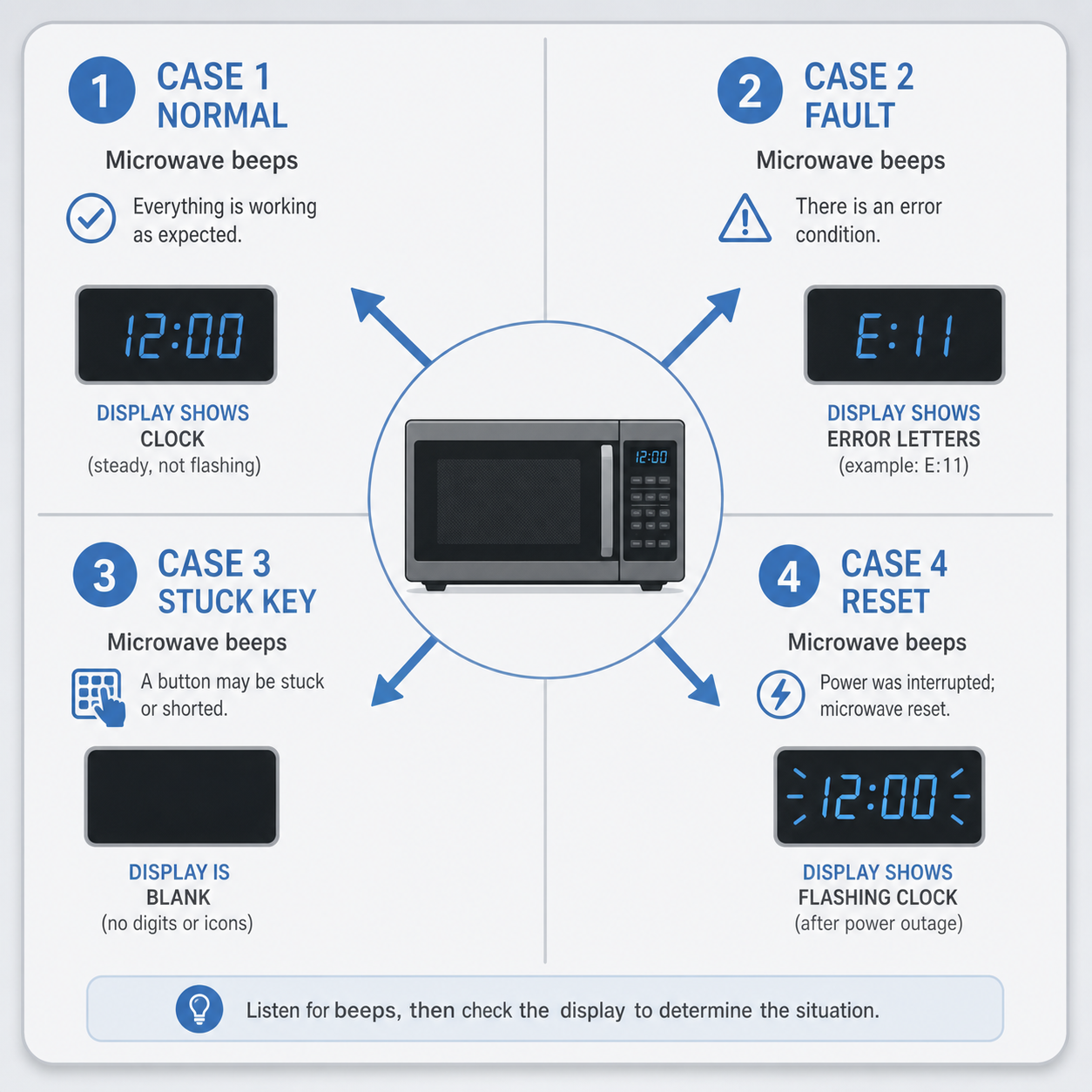
On many residential CO alarms, including current Kidde models, a CO event is signaled by four short beeps, a pause, then four short beeps again. Sound patterns are not universal: the make, model, age, and whether the unit is a combination smoke/CO alarm all matter. If you hear a loud repeating alarm and cannot positively identify it as a documented maintenance signal, respond as though it could be CO.
What to Do Right Now
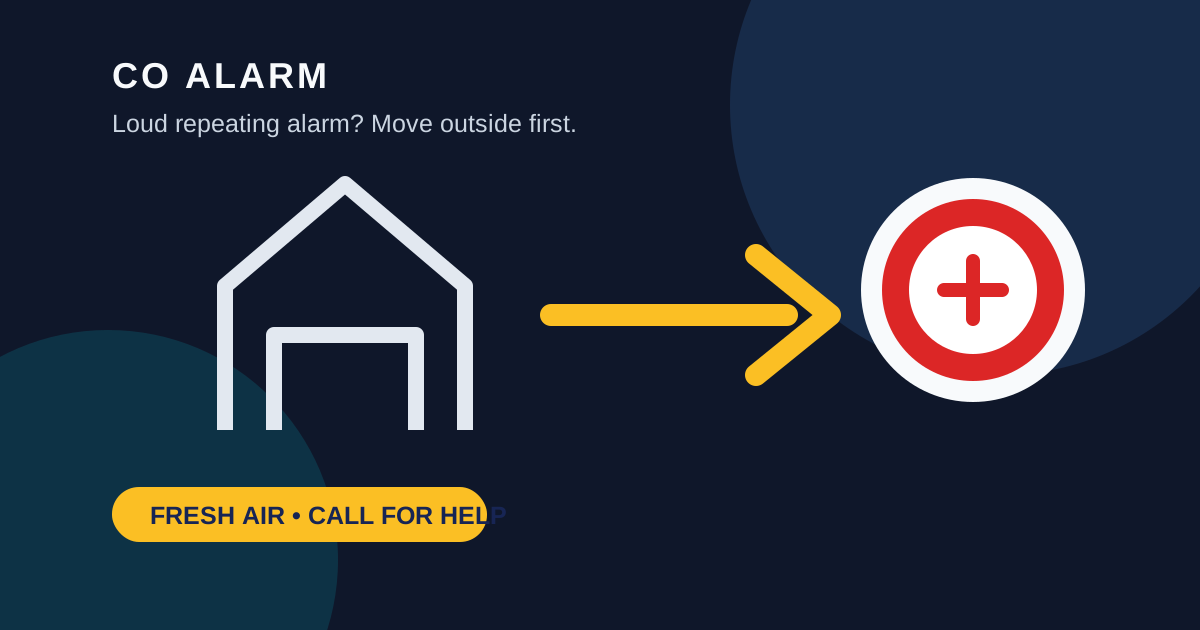
- Move outside to fresh air. Take people and pets with you. Do not look for the source first.
- Call emergency services, 911, or the fire department from outside. Do a head count after calling.
- Stay out. Do not re-enter until emergency responders give permission.
- Do not operate a suspected fuel-burning appliance until qualified personnel have checked it.
The CPSC gives these same steps. Headache, dizziness, nausea, weakness, shortness of breath, confusion, vomiting, or loss of consciousness can be signs of exposure; tell responders if anyone has symptoms.
What a Four-Beep Pattern Means by Manufacturer
A repeating four-beep pattern is a recognized CO alarm signal across many major manufacturers. Here is what verified documentation says:
Kidde
Kidde’s CO alarm support documentation states that its CO alarms use four short beeps followed by five seconds of silence, then repeating, when they detect a dangerous CO level. On Kidde combination smoke/CO models, the smoke alarm uses three beeps to distinguish it from the CO alarm.
First Alert and BRK
According to First Alert’s specification sheet for the SC5 Smart Smoke & Carbon Monoxide Alarm, the CO alarm signal is defined as 4 beeps with a flashing red LED. The smoke alarm on the same unit uses 3 beeps. This 3-beep/4-beep distinction is consistent across many First Alert and BRK combination alarms.
Nest Protect
Nest Protect uses voice alerts rather than beep counting. When it detects CO, it announces “Heads up, carbon monoxide detected in [room name]” followed by a loud horn alarm if the condition persists. Nest Protect also sends a push notification to all connected phones.
Other Brands
For brands not listed above, always check the manufacturer documentation. The four-beep CO pattern is common but not universal.
Do Not Troubleshoot a Possible CO Alarm Indoors
When a CO alarm is sounding:
- Do not remove the battery or unplug the unit to make it quiet.
- Do not open windows and decide the problem is solved without calling for help.
- Do not go room to room looking for the source.
- Do not rely on smell — CO has no color or odor.
- Do not re-enter because the alarm becomes quiet. CO can persist at dangerous levels even after the alarm cycles.
- Do not assume the alarm is false because you feel fine. CO poisoning symptoms can develop gradually.
A test button checks basic circuitry; it does not prove that the CO sensor is accurately detecting gas. Follow the manufacturer instructions for testing, cleaning, and replacement.
Common Sources of Carbon Monoxide in Homes
After emergency responders have addressed the immediate danger, understanding the potential CO source helps prevent future incidents. Common sources include:
- Gas furnaces and boilers: Cracked heat exchangers or blocked flues can release CO into living spaces.
- Gas stoves and ovens: Using a gas oven to heat the home produces CO. Always use the exhaust fan when cooking.
- Gas water heaters: A blocked or damaged vent pipe can direct CO indoors.
- Portable generators: The CPSC warns never to operate a portable generator indoors, in a garage, or near open windows. Keep generators at least 20 feet from the home.
- Fireplaces and wood stoves: Blocked chimneys or closed dampers can cause CO to back up into the home.
- Charcoal grills: Never use charcoal grills indoors or in enclosed spaces.
- Vehicles in attached garages: Even with the garage door open, running a vehicle in an attached garage can produce dangerous CO levels. Never warm up a car in an attached garage.
- Space heaters: Unvented gas, kerosene, or propane space heaters can produce CO. Use only vented heaters indoors.
After Responders Say It Is Safe
Follow the direction of responders. If a fuel-burning appliance may be involved, do not use it until a qualified technician has inspected it. The CPSC advises having fuel-burning equipment checked before it is used again after a CO incident.
Steps to take after a CO event:
- Have all fuel-burning appliances inspected by a qualified technician before using them again.
- Check your CO detector. If it is near or past its replacement date, replace it. A detector that sounded a CO alarm may need replacement depending on the model and manufacturer guidance.
- Install additional detectors if your home does not have coverage on every level and outside sleeping areas. See our CO detector placement guide.
- Review your evacuation plan. Ensure everyone in the household knows the exit routes and meeting point.
If the Sound Is Only a Short Chirp
A single short chirp can be a maintenance or trouble signal, but the meaning is model-specific. Kidde lists low battery, end of life, malfunction, and error-code conditions among possible reasons for chirping on its CO alarms. Check the label and manual rather than assuming a chirp is harmless. If you cannot identify the signal or any CO concern remains, get outside and seek emergency guidance.
For non-emergency chirping after you have confirmed the unit is not sounding a CO event, see CO detector beeping patterns.
FAQ
Does four beeps always mean carbon monoxide?
A repeating four-beep alarm is used for a CO event on many alarms, including current Kidde and First Alert models, but exact sounds vary by make and model. Treat any loud repeating CO-alarm signal as an emergency unless manufacturer documentation clearly identifies another cause.
What if the alarm stops before help arrives?
Stay outside and follow the guidance from emergency responders. A quiet alarm does not establish that the home is safe to re-enter. CO can dissipate temporarily and then build up again.
My CO detector went off while I was cooking. Was it a false alarm?
It is possible that cooking with gas produced enough CO to trigger a nearby detector. However, never assume a CO alarm is false without having responders check. If you have a gas stove and your CO detector is in the kitchen, consider relocating it following manufacturer placement guidelines — but still respond to every alarm as if it is real.
How is a four-beep CO alarm different from a three-beep smoke alarm?
On most combination smoke/CO detectors, the smoke alarm produces three repeating beeps while the CO alarm produces four repeating beeps. This distinction helps identify which hazard is present. If you have separate smoke and CO detectors, each device uses its own pattern. When in doubt about which hazard is present, evacuate and call 911.
Should I replace my CO detector after it goes off?
Not necessarily. Most CO detectors can sound multiple CO alarms during their certified lifespan. However, if the detector is near or past its replacement date (7–10 years from manufacture), replace it regardless. Also replace the detector if it was exposed to extreme conditions or if it no longer passes a button test.
Can I use a portable generator on my porch or balcony?
No. The CPSC warns that portable generators must be used outdoors at least 20 feet from the home, with the exhaust directed away from doors, windows, and vents. Porches, balconies, and garages are too close to living spaces and can allow CO to enter the home.
Sources
- U.S. Consumer Product Safety Commission: Carbon Monoxide Questions and Answers
- Kidde: Why Is My Carbon Monoxide Alarm Beeping or Chirping?
- First Alert SC5 Specification Sheet
- CPSC: Portable Generator Safety
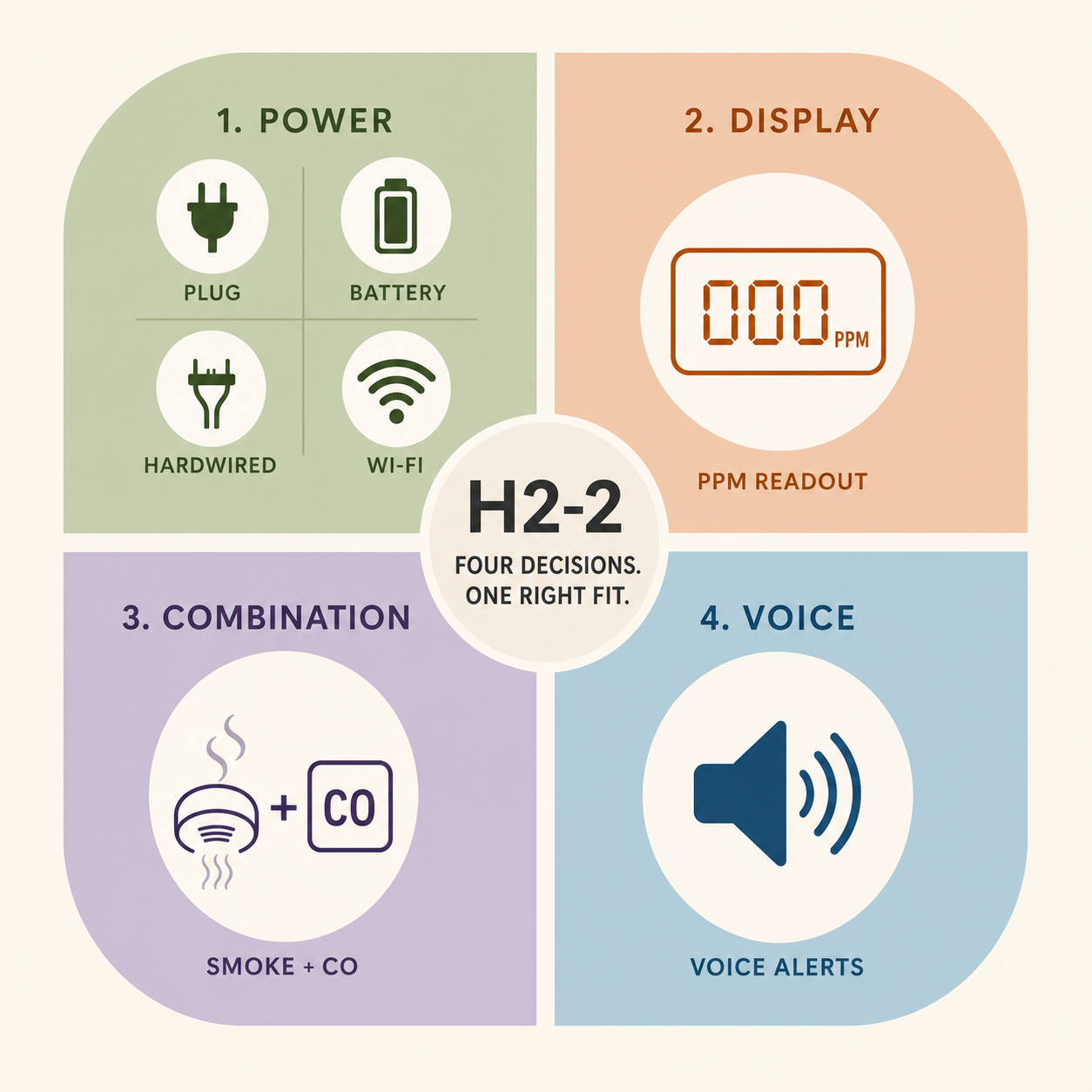
Four beeps means CO is present right now. A plug-in digital-display unit for bedrooms and living areas adds the redundancy every CO plan needs after the event.
Check price on Amazon Price & availability shown on Amazon.com — we may earn a commission.